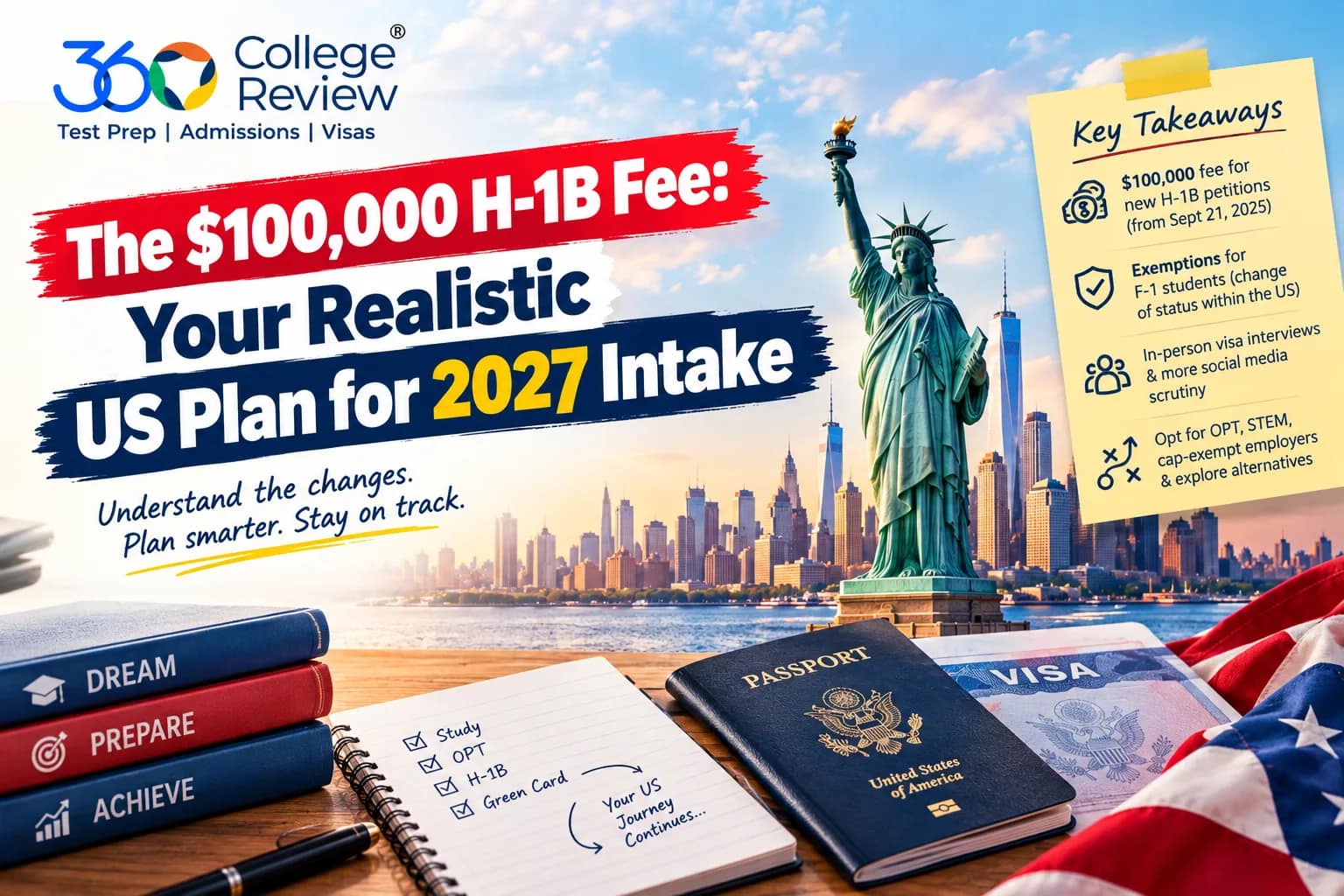
When the US government announced a $100,000 payment for new H-1B visa petitions in September 2025, my phone did the thing it always does after a headline like that — it lit up. Students mid-application. Parents mid-panic. And one worried father in Ludhiana who called to say he might need to stop his daughter’s GRE prep the very next morning.
Take a breath. The picture is complicated, but it is not the end of the road — and it is definitely not what most WhatsApp forwards told you. Let me walk you through what actually happened, what it means for you as an Indian student eyeing the 2027 intake, and how to rebuild your US plan so it survives.
In September 2025, a presidential proclamation imposed a $100,000 payment requirement on new H-1B petitions filed from September 21, 2025 onwards. The H-1B, as you probably know, is the work visa most international graduates use to stay in the US after training. The regular cap of 65,000 visas plus another 20,000 for US master’s graduates — 85,000 in total — is unchanged.
Here’s the part that barely made the headlines, and it matters enormously: the proclamation comes with exemptions for anyone applying through “change of status” from inside the US — including students already in the country on F-1 visas doing their OPT (the practical training period after graduation). In plain language:
You’ve probably also heard about the visa interview changes — and they’re real. Since September 2025, most applicants, including students, must attend in-person interviews again; the interview-waiver facility that saved many Indians a consulate trip has been substantially cut back. Social media scrutiny has also expanded — officers review your public online presence, and your DS-160 form asks about your social media handles. Nothing you post is private in the visa office’s eyes. Clean up, but don’t delete your identity — inconsistent handling of accounts can raise flags too.
Here’s the honest frame: the US remains the world’s largest destination for international students — over 1.17 million international students were enrolled there in 2023, and Indians are the second-largest group, over 3.3 lakh of us per Open Doors data. No single fee changes that gravity. What changes is who can afford to gamble on which strategy.
Think of it like this. The old US playbook was: study → OPT → H-1B lottery job → green card. That pathway still works — through the change-of-status exemption, a student who finishes their degree in the US and moves to H-1B from OPT-side is not paying $100,000. The people hit hardest are companies trying to import graduates directly from India. That’s a recruiting-firm problem more than a student problem — but it reshapes which jobs exist for new grads, because employers now weigh sponsorship costs before hiring anyone new.
Your job as a 2027 applicant is to make OPT — Optional Practical Training — the spine of your plan, not H-1B.
Expect the process to feel stricter than it did for the seniors who went before you.
You have excellent Plan B destinations, and the smartest 2027 applicants now maintain parallel files — not because they’re defeatists, but because policy risk is now a genuine variable.
The $100,000 H-1B fee is a shock to the system, I won’t pretend otherwise. But shocks like this separate the planners from the dreamers — and you, the person still reading this at the fourth FAQ, are clearly a planner. The US is no longer a straight escalator to a green card; it’s a structured, strategic pathway where OPT design, employer type and timing decide everything. Get those three things right, keep your documents spotless, and the American chapter of your story is still very much open. And if it isn’t? Then you’ll be standing at the door of three other countries with the same excellent preparation. Either way, you win — because the preparation was never wasted. Talk to us at 360 College Review before you apply; one honest counselling hour beats a hundred confused forum threads.
– The Author is Mr. Ajay Thiara, Founder & Managing Director of 360 College Review