ClickCease

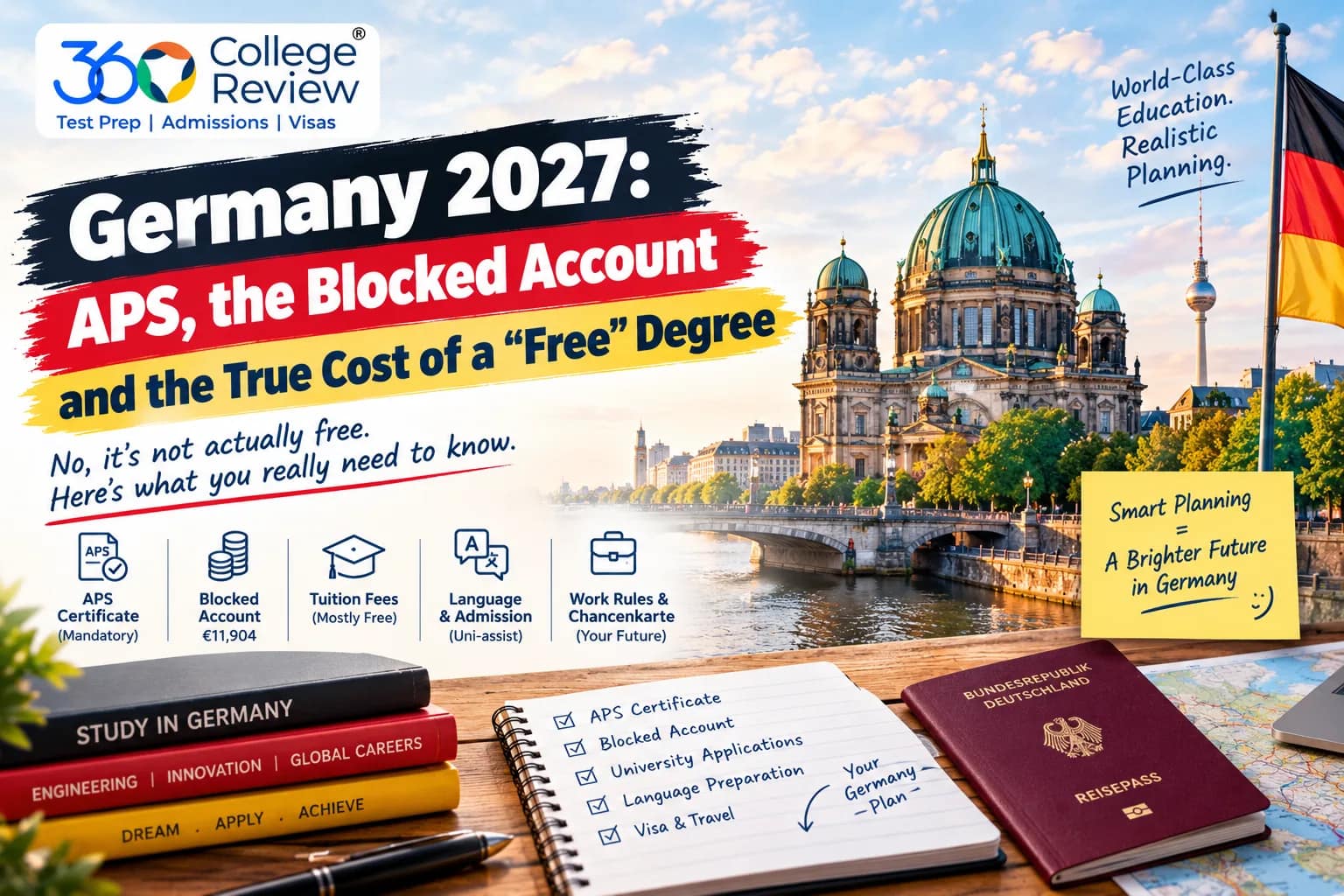
Germany 2027: APS, the Blocked Account and the True Cost of a "Free" Degree

Germany 2027: APS, the Blocked Account and the True Cost of a "Free" Degree

Every winter, someone’s uncle in Ludhiana declares that Germany is free, and every winter an unprepared student discovers in Frankfurt that “free” tuition still arrives with a shopping list. Germany remains one of the smartest engineering destinations on earth — India’s largest international student group study there — but the smart money in 2026–27 is the family that understands Germany’s real cost structure before admiring its zero-tuition promise. Let’s do that together.

Why Germany Keeps Winning Indian Engineers

The stats first: Germany hosts around 3.7–3.8 lakh international students (2023/24), and India has been the largest sending country since winter 2022–23 — about 43,000 Indian students and climbing. Public university tuition is essentially zero outside one state (Baden-Württemberg charges non-EU students about €1,500 per semester = €3,000 a year), living costs are Europe-moderate, and post-study work rules are generous by any standard. For a student who wants top-tier engineering without Anglophone pricing, Germany is genuinely the best deal in the western world.

But the entry checklist has teeth. Here’s the updated 2026–27 version.

The APS Certificate: Your Mandatory Pre-Flight Check

Since 1 November 2022, every Indian applicant for a German student visa needs an APS certificate — a document-verification and eligibility check run by the APS India office in Delhi. It is the gate before the gate:

  • What it verifies: authenticity of your academic documents and formal eligibility for German university admission.
  • Cost: approximately ₹18,000 for the standard certificate process.
  • Timing: typically 3–6 weeks in normal seasons — longer during peak months. Start the moment you decide on Germany; applications and the visa itself both want it in hand.

The students who panic in June are always the ones who discovered APS in March. Don’t be that student — APS in winter, applications in spring, visa in summer. That rhythm keeps you ahead of every deadline.

The Blocked Account: €11,904 and Why It Matters

The famous “blocked account” (Sperrkonto) is living-cost proof for the visa: a deposit of €11,904 per year as of the January 2025 rate — €992 per month — locked with an approved provider (Fintiba, Expatrio and similar), from which you withdraw roughly €992 monthly after landing. The German missions revise the amount periodically, so verify the current rate when you apply — but budget at least €1,000 per month of true living costs in your head, because that’s what cities actually charge.

  • What it buys you: visa compliance for the first year, and a realistic monthly budget for a student city (Munich runs higher; Leipzig and Chemnitz friendlier).
  • What it doesn’t cover: tuition at Baden-Württemberg universities (€3,000/year for non-EU students), semester contributions everywhere else (€150–€350 per semester — this covers transport passes and student services), initial setup costs (deposit flat+insurance), and flight+first-month buffer of roughly €1,500.

Rough annual total for a comfortable first year in a mid-cost city: €12,000–€14,000 — or ₹11–13 lakh. Still, compare honestly with the UK’s £30,000–45,000 and the US’s $40,000–70,000, and Germany’s value case survives intact — because “free tuition” was never the real prize. The real prize is tuition-free *quality*: a TUBerlin, RWTH Aachen or TU Munich degree costs the world nothing and weighs the same as a £40,000 degree in an employer’s eyes.

Admission Mechanics: uni-assist, German Levels and English-Taught Programs

  • ~2,000 English-taught master’s programs exist in the DAAD international-programs database — excellent options in engineering, data science, management and renewable energy. Bachelor’s programs in English are rare; plan a German-taught bachelor’s or a master’s-first strategy.
  • German language: even in English-taught programs, daily life asks for German. Arrive with A1–A2 minimum; build toward B1 during your studies. Every internship, every part-time job, every landlord conversation gets easier per level.
  • uni-assist: most public universities route international applications through this central evaluation service — one fee, one document bundle, multiple universities. Deadlines for winter intake (October start) usually fall between December and July depending on the university, but competitive programs — TU9 engineering, business analytics — fill early. Apply by December–February for comfort.

Work Rules, Chancenkarte and After Graduation

  • Working while studying: F-1 style limits here are German — 120 full days or 240 half days per year of work alongside study (plus campus jobs and research assistant roles that don’t fully count against the quota). Working students (Werkstudent roles) in German industry are normal and valuable.
  • Minimum wage: €12.82/hour through 2025, rising to €13.90 in January 2026 — that’s real income for your quota-days.
  • The Opportunity Card (Chancenkarte): since June 2024, a points-based job-search permit allows degree holders to stay up to 1 year to seek work, with proof of funds and language basics. It’s a bridge for graduates who haven’t converted jobs quickly.
  • Post-study job hunting: after graduating, you get an 18-month job-seeker residence permit, extendable toward the EU Blue Card on employment — Blue Card salary floors in 2025 ran around €48,300 (about €43,800 for shortage occupations like IT and engineering).
  • The real secret of German employability: internships. A German company that hosted you as a Werkstudent hires you with a 60% head start; degrees alone are weaker currency here than anywhere else in Europe.

Final Thoughts

Germany’s zero tuition is real, and it still amazes me how many students underuse it — but “free” was never free of paperwork: APS before applications, blocked account before visa, A1 German before landing, internships from semester one. Students who plan these four gates early arrive relaxed and graduate employable; students who discover them late arrive stressed and stay stressed. If your 12th or engineering result is strong, your budget is realistic (₹11–13 lakh a year, not zero), and you can commit to learning German like your career depends on it — because here it truly does — then Germany in 2027 is still the best value in western education. Come to 360collegereview.com with your marksheets; we’ll check APS timelines, university shortlists, and a blocked-account-sized plan before you pay a single euro.

– The Author is Mr. Ajay Thiara, Founder & Managing Director of 360 College Review
Frequently Asked Questions

What exactly is the APS certificate and can I apply without it?

APS is mandatory document-verification for Indian students applying for German study visas since November 2022 — you cannot complete the visa process without it. Cost ~₹18,000; allow 3–6 weeks.

How much money do I need to block for the visa?

€11,904/year as of the January 2025 rate (€992/month), deposited in an approved blocked account. Rates are revised periodically — verify the current figure when applying.

Is tuition really free at German public universities?

Essentially yes, except Baden-Württemberg, which charges non-EU students about €1,500 per semester (€3,000/year). All universities charge modest semester contributions (€150–€350) that usually include regional transport.

Are there English-taught programs in Germany?

Yes — roughly 2,000 English-taught master’s programs across the DAAD database, especially in engineering, data and management. English bachelor’s are rare; most bachelor’s require German proficiency.

How much can I work while studying?

120 full days or 240 half days per year, plus limited campus jobs. Minimum wage is €12.82/hour (2025), rising to €13.90 in January 2026.

What is the total realistic first-year cost?

Blocked account €11,904 + semester contribution + setup costs ≈ €12,000–€14,000 (₹11–13 lakh) for most cities; Munich or Frankfurt runs €1,500+ more per year.

Do I need German language proficiency for admission?

For English-taught master’s: usually IELTS/TOEFL, with German optional at admission — but strongly recommended for daily life and jobs. For German-taught bachelor’s: TestDaF/DSH levels required.

What is the Chancenkarte (Opportunity Card)?

A points-based 1-year job-search permit introduced in June 2024 for qualified foreign workers, with fund-proof and language criteria — useful after graduating if you haven’t yet converted a job offer.

What salary do I need for post-study work rights?

After your degree you get an 18-month job-seeker permit without a salary condition. To convert to an EU Blue Card, 2025 salary thresholds ran around €48,300 (about €43,800 for shortage occupations like IT).

Does 360 College Review handle German applications end-to-end?

Yes — APS guidance, uni-assist applications, program shortlisting by employability, blocked-account planning and pre-departure German-language advice. Book a session at 360collegereview.com and we’ll build your Germany file properly.