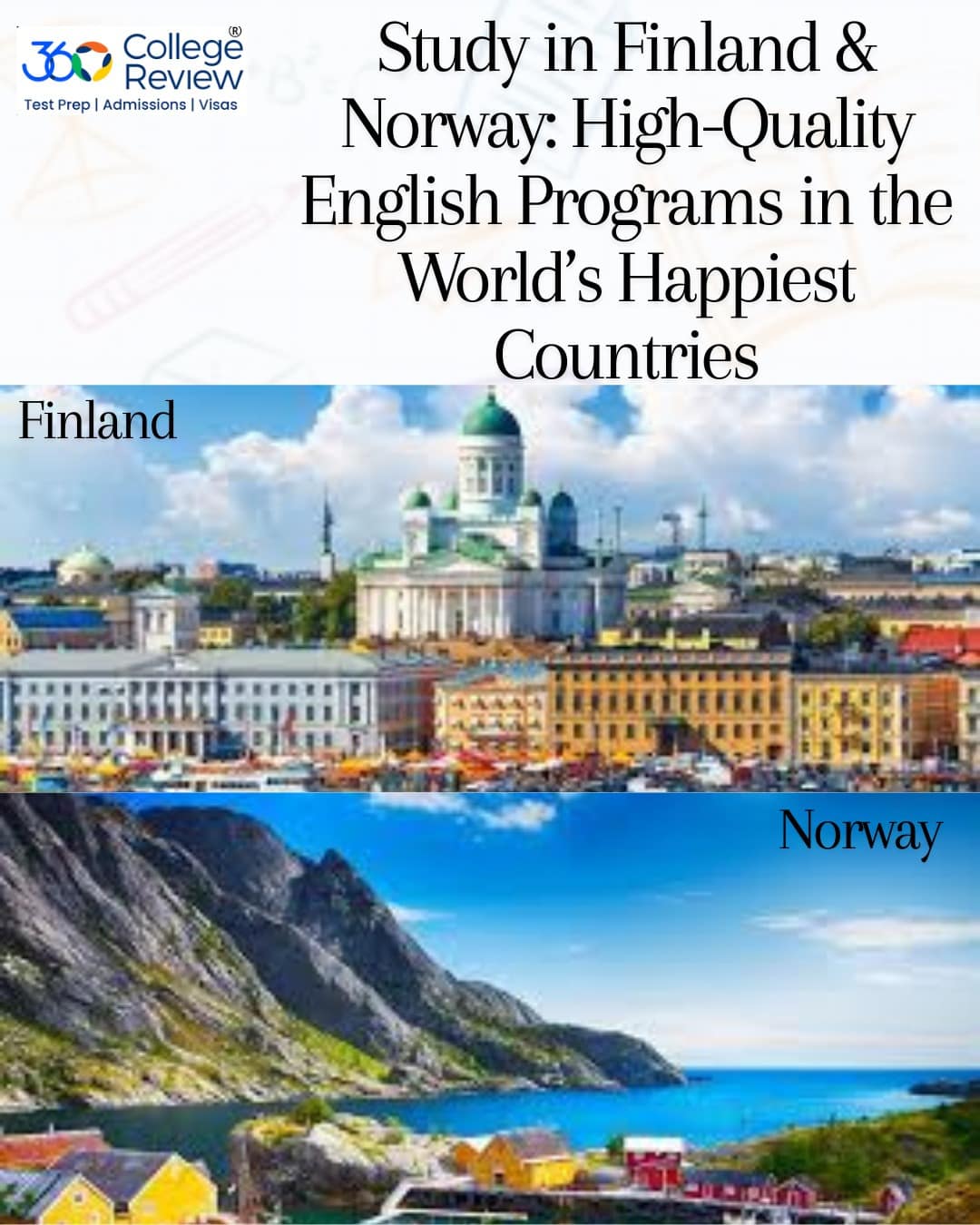
When students think about studying abroad, countries like the USA, UK, or Canada often come to mind. However, in recent years, Finland and Norway have emerged as top destinations for international students—and for good reason. Known as two of the world’s happiest countries, they offer not only an exceptional quality of life but also world-class education systems with a wide range of English-taught programs.
Both Finland and Norway consistently rank high in global happiness, safety, and education indexes. For students, this translates into a balanced lifestyle, supportive academic environments, and a strong focus on innovation and critical thinking.
Finland is globally recognized for its student-centered approach to education. Universities emphasize independent learning, creativity, and collaboration rather than rote memorization. Norway, on the other hand, is known for its research-driven universities and strong academic frameworks, especially in fields like environmental science, engineering, and marine studies.
One of the biggest advantages for international students is the availability of English-taught courses. In Finland, universities offer a wide variety of bachelor’s and master’s programs in fields such as business, IT, design, and healthcare. Norway also provides numerous masters’ programs in English, particularly in specialized and research-oriented fields.
This makes it easier for students from non-native backgrounds to integrate into the academic system without needing to learn the local language immediately.
Finland offers relatively affordable tuition fees compared to other European countries, along with generous scholarship opportunities for international students. Norway’s public universities have traditionally offered free education, but since autumn 2023 students from outside the EU/EEA and Switzerland have had to pay tuition fees at public universities. Still, the qualities of education and low cost of living in student towns make it a worthwhile investment.
Both countries allow international students to work part-time during their studies, helping them manage living expenses and gain valuable international experience. After graduation, students can apply for post-study residence permits to look for work in these countries. Rules on working hours and permit length are updated from time to time, so check the Finnish Immigration Service (Migri) and the Norwegian Directorate of Immigration (UDI) for the current conditions.
With growing industries in technology, sustainability, and innovation, Finland and Norway provide promising career pathways for skilled graduates.
Safety and inclusivity are major strengths of both countries. Campuses are welcoming, diverse, and designed to support student well-being. From modern facilities to access to nature, students enjoy a unique study-life balance that enhances both personal and academic growth.
Choosing Finland or Norway for your higher education means more than just earning a degree—it’s about experiencing a progressive education system, a high quality of life, and a future full of opportunities.
– The Author is Mr. Ajay Thiara , Founder & Managing Director of 360 College Review